Project Types Quick Find Jump straight to the entry that covers a common complaint. |
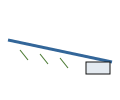
What this isThe ground immediately around a house decides where rain goes once it lands. Where paving falls towards the wall, or where soil and gravel have built up over the years, water stands against the masonry and stays there. This entry is about the fall of the ground and the level of it, which are two separate things that both matter. Telling whether your home needs itAfter heavy rain, look at where puddles form and how long they last. Inside, damp staining or salting on a wall at low level, particularly on one elevation only, is worth relating to what is outside that same wall. Check whether any air bricks are partly buried, and whether the damp proof course, usually a visible line in the brickwork, is still clear of the ground. What the job involvesThe straightforward version is lowering built-up soil and gravel to restore clearance at the base of the wall and clearing blocked gullies and channel drains. The larger version is lifting and relaying paving to a consistent fall away from the building, sometimes with a channel drain at the low edge connected into an existing gully. Both start with finding out where the water currently goes. Things to watchNever bridge the damp proof course with new paving, insulation or render; keep the clearance below it. Air bricks must stay open and above the finished level, because they ventilate the floor void. Before excavating, establish where drainage runs and where any services are buried. Where the ground falls towards the building over a large area, this stops being a paving job. |
Catalogue Status This catalogue holds 18 entries across 4 sections. Entries are written to be read and worked from. Nothing here is ordered, priced or supplied. |